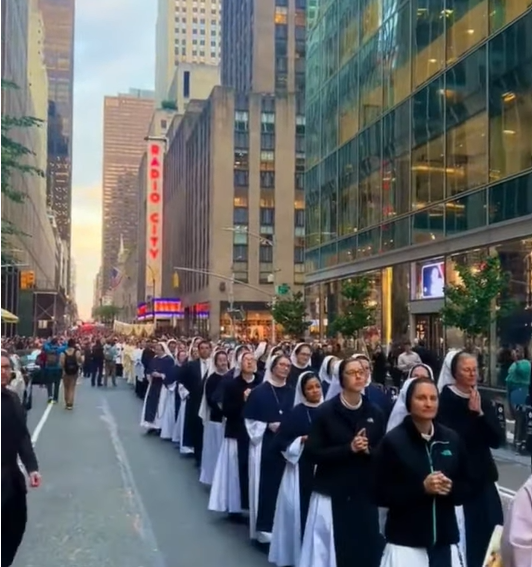
In 2026, half of New York City residents speak a language other than English as their primary language. One-quarter lack English language proficiency entirely. Last week, democratic socialists swept two state Senate races and four state Assembly contests in New York's primaries.
Stephen Miller would like you to understand that none of this is a coincidence.
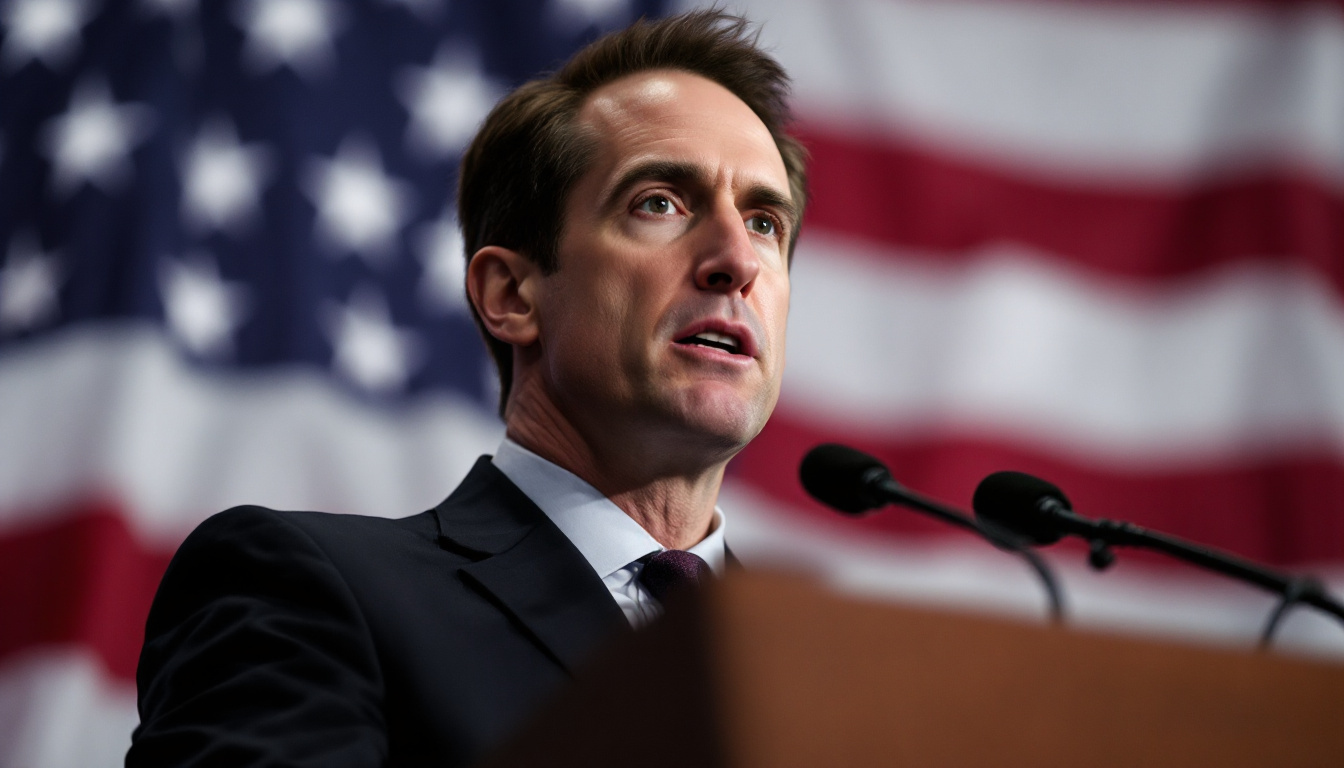
The White House Deputy Chief of Staff for Policy sat down with Sean Hannity on Fox News this week and delivered what amounted to a political eulogy for the Democratic Party as anyone over forty remembers it. Not a rant. Not a campaign ad. A diagnosis — specific, historical, and difficult to argue with on the merits.
"We used to have a country where you had a center-left Democrat party… with many who were actually center-right," Miller said. "These were Reagan Democrats or Blue Dog Democrats. So that was the spectrum the Democrat party lived in, from center-left to center-right."
That spectrum doesn't exist anymore. Miller's argument, reported by LifeZette, isn't that Democrats drifted left. It's that they abandoned the playing field entirely and moved to a different sport.
"Over time the Democrat party has abandoned all of that," Miller said, "and they have instead adopted this radical, revolutionary, and in many cases, violent ideology that wants to tear America down and destroy everything that we know and love."
Strong words. But here's the thing about strong words — sometimes the evidence is stronger.
Consider what just happened in New York. Democratic socialists — not mainstream liberals, not moderates, not even progressive-but-pragmatic types — won six primary contests for the state legislature. Zohran Mamdani, a democratic socialist assemblyman, has become the face of a political movement that treats the abolition of ICE as a starting position, not a fringe demand. These aren't candidates sneaking through low-turnout races in safe districts. They're winning because the Democratic base wants them.
Miller connected the electoral math directly to immigration policy. "Democrats imported a new electorate," he said, "and that electorate is remaking Congress."
The demographic data backs him up. When half a city's residents don't speak English at home and a quarter can't navigate it at all, the political incentive structure changes. Candidates don't need to appeal to the broad middle anymore. They need to appeal to communities that have been organized around government dependency and ethnic solidarity — communities that democratic socialist candidates are purpose-built to serve.
Miller described where this trajectory leads: "Living in a state of total anarchy, without police, without law enforcement, where criminals can rape and maim and murder with impunity."
Hyperbolic? Walk through the parts of New York where the squad-aligned city council members defunded police precincts and get back to us.
He went further on education: "Where your kids are taught from the age of two to hate America, to hate their God, to hate their parents, to hate their family."
The instinct is to dismiss that as red meat. But public school curricula in New York, California, and Illinois have been publicly documented — by their own districts — teaching frameworks rooted in dismantling "whiteness," questioning the nuclear family, and treating American founding principles as instruments of oppression. Miller isn't describing a hypothetical. He's describing a Tuesday in a public elementary school.
The standard rebuttal from Democrats is that Miller is an extremist painting with a broad brush, that most Democratic voters are normal people who want healthcare and good schools. That's probably true of the voters. The problem is it's no longer true of the candidates those voters are selecting. When your primary electorate is choosing democratic socialists over mainstream liberals in six races in a single cycle, the broad brush is just drawing what's there.
Miller framed Trump's movement as the alternative: an America First agenda that invites former Democrats back. "We need Democrats to come vote for us," he said — an appeal that Ronald Reagan made in the 1980s when Tip O'Neill still ran the House and the two parties could disagree without one of them trying to dismantle the country.
That era produced Reagan Democrats. This era produces democratic socialist assemblymen.
The distance between those two outcomes is the distance the Democratic Party has traveled. Miller just measured it out loud.