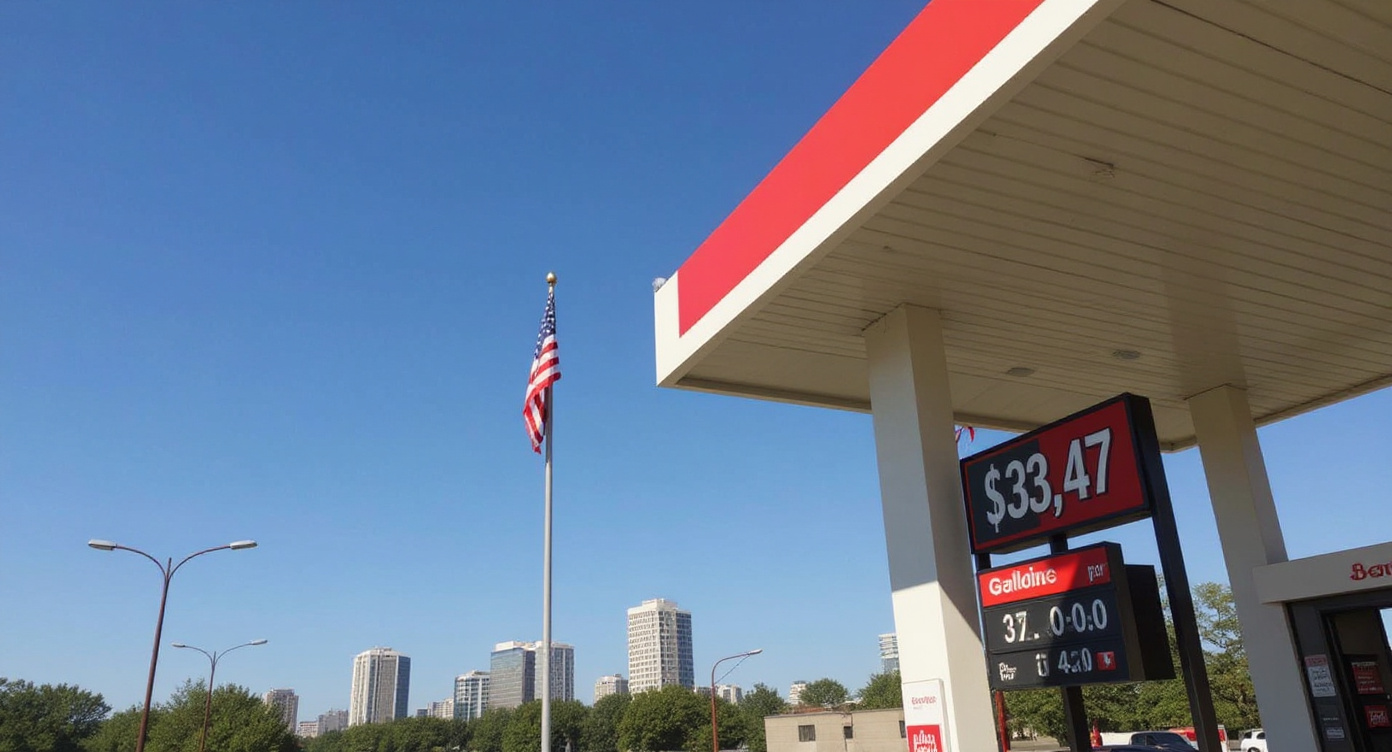
A gas station in Philadelphia is selling fuel at $3.47 a gallon. Drivers are saving roughly 50 cents per gallon compared to surrounding stations. Volume is up 51.3% since the discount launched on July 3. Three hundred and twenty competing stations within a 40-mile radius have already cut their prices by 10 cents to keep up.
And the press thinks this is a scandal.
The stations belong to Freedom Fuel Network LLC, a Delaware-incorporated company formed on June 23 that President Trump promoted as an example of what energy competition looks like. The business model isn't complicated: buy wholesale, add a thin margin, pass the savings to consumers. The result is cheaper gas in Philadelphia and New Jersey — which, last time we checked, is what every politician in America claims to want.
But outlets like The Hill and Politico went digging. Not into why gas costs so much everywhere else. Into why this company dared to charge less. They questioned the corporate structure, the incorporation date, the timing of the launch — everything except the price on the pump, which is the only thing drivers actually care about.
White House spokesperson Taylor Rogers put it plainly on social media: "Freedom Fuel Network is a private company that is lowering prices at their gas stations to make filling up more affordable. Leave it to the Trump Deranged Fake News to try to villainize a patriotic company that is doing a GOOD thing for its local community."
The White House also addressed the subsidy question directly, since the press seemed to be fishing for one: "There is no entity or person subsidizing the lower gasoline costs. They are simply reducing their margin to make prices at the pump more affordable for drivers in Philadelphia and New Jersey."
No subsidy. No government program. A private company chose to sell gas for less, and the market responded. As a company executive told FOX Business: "We can sell it wholesale plus some of our cost and still save consumers about 50 cents per gallon, which is, that's real savings, and you know once one person does it, then kind of the rest of the market will follow."
That last part is the key. The 320 stations that dropped their prices by 10 cents didn't do it out of patriotism. They did it because Freedom Fuel was eating their lunch. That's competition. That's how markets are supposed to work. One company undercuts, others follow, and consumers win.
The press could have written that story — the story about how one discount station triggered a regional price war that benefited hundreds of thousands of drivers. Instead, they wrote the story about how Trump said something nice about it, so it must be suspicious.
Jarrod Agen, the White House executive director of the National Energy Dominance Council, pointed to the 51.3% volume increase as evidence that consumers are voting with their wallets. People drove out of their way to save money on gas. That's not a controversy. That's a customer base.
The entire media offensive against Freedom Fuel boils down to one complaint: a company Trump praised is making gas cheaper, and they can't find anything actually wrong with it.
Cheaper gas. More competition. Lower prices spreading across 320 stations. The press looked at all of that and decided the real story was the Delaware LLC filing date.