There are moments when a story stops being about politics and starts being about something far more basic: right and wrong.
And what just happened at Loyola University Chicago is one of those moments.
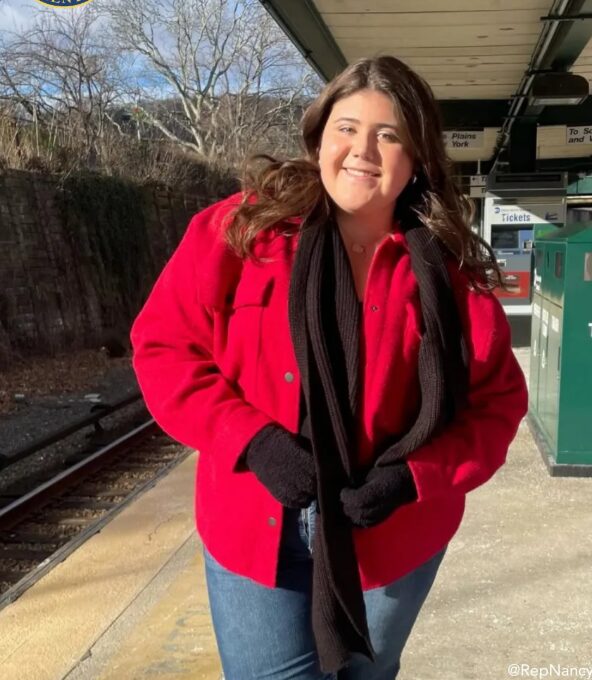
Eighteen-year-old Sheridan Gorman was shot execution-style in the head while walking with friends along the Chicago lakefront. A freshman. A young woman with her entire life ahead of her. Gone in an instant.
But instead of rallying around Sheridan, honoring her life, or even showing the bare minimum level of moral clarity, Chicagoans have shown support for her alleged killer.
Including Loyola University’s own student newspaper, who after writing about Sheridan’s murder wrote a second follow up piece apologizing for their first piece.
They apologized.
Not to Sheridan’s family.
Not to her friends.
Not to a campus shaken by a brutal, senseless killing.
They apologized over the wording used to describe the man accused of murdering her.
Sick.
In an editor’s note, the Loyola Phoenix expressed regret for calling the suspect—identified by the Department of Homeland Security as a “Venezuelan criminal illegal alien”—an “illegal immigrant.” The paper said the language caused “harm” and did not align with its values.
“No human’s existence is illegal,” the editors wrote, adding that they “quickly changed [their] wording to reflect that.”
That’s where we are now. A young woman is dead, and the institutional instinct is to protect the language surrounding the accused—not the memory of the victim.
The paper even went so far as to rewrite its own coverage, referring to the suspect as a “Rogers Park resident,” as if this were a zoning issue instead of a violent crime.
And the backlash was immediate.
“If I were her parents this would send me over the edge!” one commenter wrote.
Another added, “No dystopian could conjure the college-aged left as they are now. They surpass parody.”
And honestly, it’s hard to argue with that.
Because this isn’t happening in a vacuum.
The suspect, Jose Medina-Medina, was reportedly released into the United States in May 2023 after being apprehended at the border—and then released again after a shoplifting arrest in Chicago just one month later.
So when people ask how something like this happens, there is a real, uncomfortable answer.
Policies matter. Enforcement matters. Who you let into the country—and whether you keep track of them—matters.
But instead of confronting that reality, Chicago’s leadership has gone out of its way to avoid it.
Mayor Brandon Johnson has refused to apologize to Sheridan’s family while continuing to defend sanctuary policies that allowed the suspect to remain in the city. Others have gone even further.
Chicago Alderwoman Maria Hadden suggested Sheridan may have simply been “in the wrong place at the wrong time,” even floating the idea that the suspect might have been “startled.”
Startled.
A masked man approaches a group of young girls and shoots one of the girls in the head—and the response is to speculate about his emotional state?
You don’t need to be a political expert to see the problem here. You just need basic human instincts.
And that’s what makes the Loyola newspaper’s response so jarring. It’s not just tone-deaf—it’s emblematic of a broader mindset that seems more concerned with ideological language than with actual human loss.
Words matter. Of course they do.
But priorities matter more.
And when a newsroom chooses to issue a public apology over terminology—while saying nothing comparable about the life that was taken—it tells you everything you need to know about where those priorities lie.
Sheridan Gorman wasn’t a headline. She wasn’t a “community harm” issue. She was a daughter, a friend, a student just beginning her life.
That’s the story.
Not a style guide. Not a semantic debate. Not a carefully worded editor’s note designed to avoid offending the wrong audience.
A life was taken. Violently. Permanently.
And if a university newspaper can’t bring itself to center that reality—if it can’t even muster the clarity to stand firmly on the side of the victim—then something has gone deeply, unmistakably wrong.
Because at the end of the day, this shouldn’t be complicated.
A young woman is dead.
And she deserved better—from the people who failed to protect her, and from the people who should have been brave enough to say her name first.