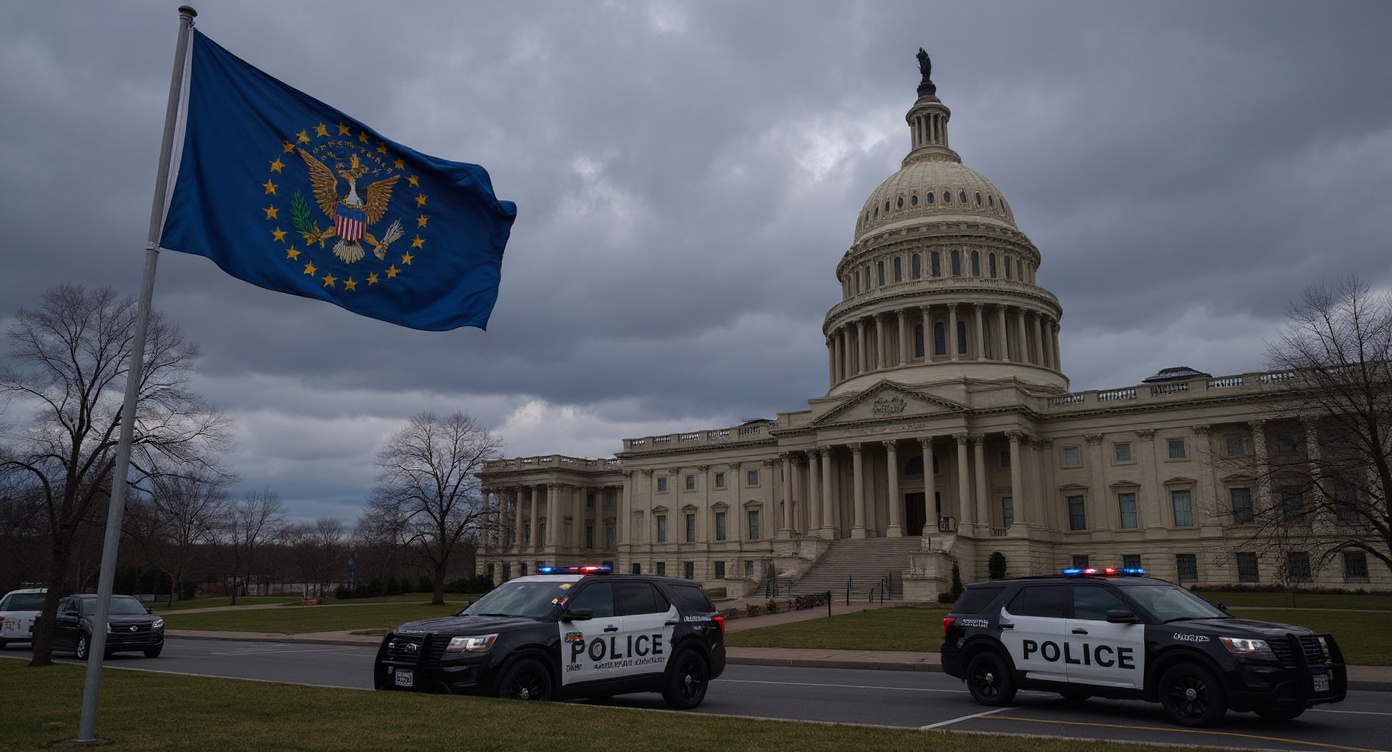
The Iran war has consumed every news cycle for three weeks. Gas prices, tanker attacks, uranium stockpiles, Mojtaba Khamenei — there is a lot to watch. Which means there is a lot happening elsewhere that nobody is watching.
Here is one of those things.
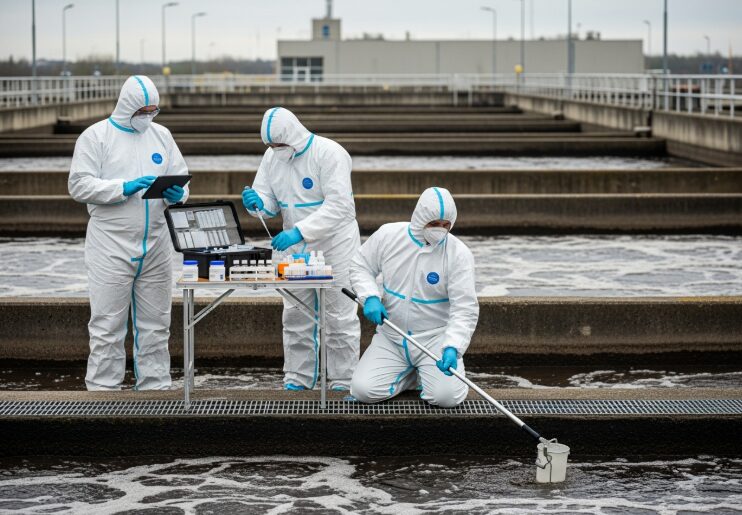
A bipartisan group of U.S. senators — led by Tim Scott (R-SC) and Cory Booker (D-NJ), with co-sponsors including Maggie Hassan, Ted Budd, Roger Wicker, and Angus King — just introduced the PREDICT Act. The full name is the Public Health Response and Emergency Detection through Integrated Wastewater Community Testing Act. The goal, according to its sponsors, is to build a permanent, nationwide bio-surveillance network that monitors America’s sewage systems for pathogens — and to keep that network running indefinitely, not just during outbreaks.
Read that again. Permanent. Nationwide. Surveillance. Those three words appear in the bill’s own framework. The senators put them there themselves.
The pitch is straightforward and, in isolation, sounds reasonable: monitor sewage for viruses before people show symptoms, detect outbreaks early, respond faster. During COVID, wastewater surveillance was used in real time to track infection spread in communities. Supporters say it saved lives by giving officials advance warning.
Here is what the pitch leaves out.
Wastewater surveillance does not only detect viruses. The same analysis that identifies COVID or measles in a community’s sewage also captures pharmaceutical residues — meaning it can identify what medications a community is taking. It detects illicit drug metabolites — meaning it maps community drug use patterns at the neighborhood level. It picks up dietary markers, hormonal data, and other biological indicators that have nothing to do with infectious disease. The infrastructure that detects the next pandemic is the same infrastructure that builds a comprehensive biological profile of every community whose sewage it monitors.
The PREDICT Act proposes a national transparency dashboard where this data would be housed and accessible to public health officials. The bill does not specify who controls that dashboard, who has access beyond public health agencies, how long the data is retained, or what legal constraints prevent its use for purposes beyond pandemic detection.
This is the detail that matters most and gets the least attention. Previous pandemic surveillance efforts were framed as emergency responses — temporary measures justified by temporary crises. The PREDICT Act is not framed that way. It is framed as permanent public health infrastructure. The network it would build does not have a sunset clause. It does not expire when measles season ends or when the next outbreak is contained. It runs continuously, collecting data continuously, feeding a national dashboard continuously.
That is a fundamentally different thing than emergency pandemic response. That is a standing surveillance apparatus with pandemic detection as its stated justification.
The last time Americans were told that a temporary emergency required temporary health data collection, the temporary emergency lasted two years. The mandates, the restrictions, and the surveillance mechanisms that came with it did not disappear quietly when the emergency ended. Some of them became the foundation for exactly the kind of permanent infrastructure the PREDICT Act is now trying to codify.
Tim Scott is a reliable conservative vote. His co-sponsorship will be used to reassure Republicans that this bill is safe, sensible, and bipartisan. That reassurance is worth examining carefully.
Cory Booker is one of the most progressive members of the Senate. He does not typically join forces with Tim Scott on legislation that conservatives would instinctively trust. When those two names appear on the same bill involving permanent government data collection infrastructure, the correct response is not automatic comfort. It is careful reading of what the bill actually does versus what its sponsors say it does.
The bill has not passed. It was just introduced. This is the moment to pay attention — before it picks up momentum, before it gets attached to a larger spending package, before the “it’s just pandemic detection” framing has time to calcify into conventional wisdom.
Every major expansion of government surveillance in American history arrived wearing a reasonable justification. The Patriot Act was counterterrorism. PRISM was national security. COVID contact tracing was public health. Each time, the architecture built for the stated purpose outlasted the emergency that justified it and found new uses its original sponsors never publicly acknowledged.
The PREDICT Act may be exactly what its sponsors say it is — a good-faith effort to detect the next pandemic before it spreads. It may also be the foundation of something considerably larger, built quietly while three weeks of Iran war coverage kept every eye pointed elsewhere.
The bill has a name. It has sponsors. It has a national dashboard. What it does not yet have is enough public scrutiny. That starts now.