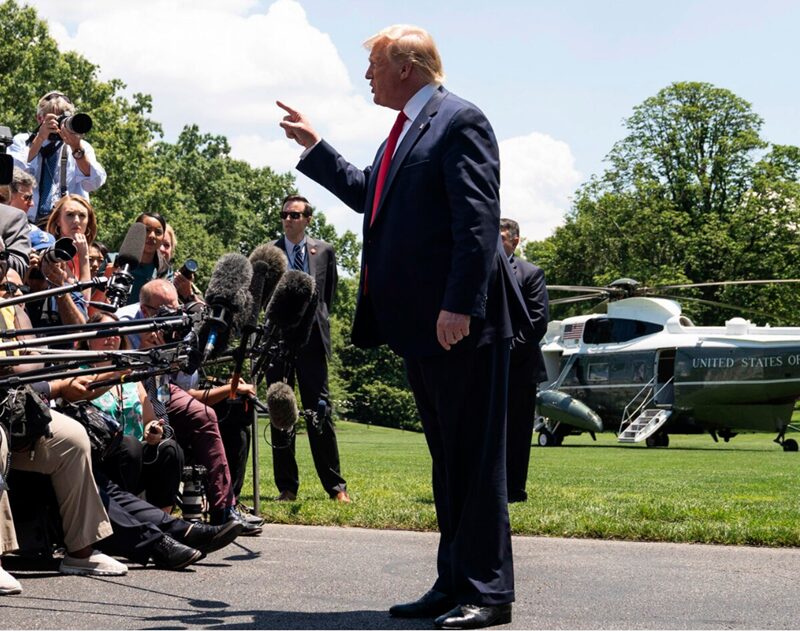
During a speech in Memphis last week, President Trump called the SAVE America Act “the most important thing” his party could pass — and then told Republican senators directly: “I’m suggesting strongly to the Republican Party, don’t make any deal on anything” unless voter ID is included. He added, for anyone who missed the message: “I think anybody that votes against it shouldn’t be allowed to run for office.”
Senate Minority Leader Chuck Schumer had a one-sentence response: “We ain’t doing it.”
That exchange is where the country currently stands on election integrity — and it’s why the DHS shutdown that has been stranding spring break travelers in three-hour security lines has not been resolved.
The Safeguard American Voter Eligibility Act, which passed the House on February 11th, requires documentary proof of U.S. citizenship to register to vote in federal elections. The acceptable documents are the same ones most Americans already carry or have access to: a U.S. passport, a REAL ID-compliant driver’s license paired with a birth certificate, a military ID with citizenship documentation, or a tribal government photo ID with citizenship documentation.
To cast a ballot — in person or by mail — voters must present a photo ID with a visible expiration date. Mail-in voters must submit a copy of their ID or provide a Social Security number with a signed affidavit.
Additionally, states must share voter rolls with the Department of Homeland Security for citizenship verification, and must establish processes to remove any noncitizens found to be registered.
That is the bill. Show your citizenship documents when you register. Show a photo ID when you vote. Share your voter rolls with DHS. Democrats are calling this “voter suppression.”
The Senate has now been debating the SAVE Act for two weeks. Senator Mike Lee of Utah kicked off floor debate with a late-night speech and has been the bill’s most vocal Senate champion. Senate Majority Leader John Thune is managing the floor process, though he has privately acknowledged the challenge: Republicans hold 53 seats but need 60 votes to overcome the filibuster, meaning they need at least seven Democrats to cross party lines. Not one has.
Schumer has been explicit about why. He told reporters that Trump’s insistence on linking the SAVE Act to DHS funding was “trying to sabotage negotiations” — framing election integrity as the obstacle to reopening the government rather than his own refusal to allow citizenship verification on voter rolls.
The irony is worth sitting with for a moment. Democrats spent the DHS shutdown fight claiming to care about TSA workers, Coast Guard personnel, and FEMA staff going without pay. Their solution to end that suffering: fund everything except ICE, and under no circumstances require proof of citizenship to vote. TSA agents can wait. Voter rolls stay unverified.
The standard Democratic argument against the SAVE Act is that noncitizen voting is essentially nonexistent — state audits consistently find vanishingly few cases. If that’s true, the SAVE Act costs almost nothing to pass. If you’re a citizen and you have a passport or a birth certificate, the bill changes nothing about your voting experience. The only people affected are people who cannot or will not document their citizenship.
Which raises the obvious question: if noncitizen voting is so rare that it’s not worth preventing, why is Chuck Schumer working this hard to prevent the prevention of it?
Trump’s framing — that the SAVE Act is “the most important thing” — reflects a calculation that election integrity is the foundational issue. Every other policy win can be reversed by the next election if the election itself is not secure. You can fix the border, cut taxes, rebuild the military, and reshore manufacturing — and lose all of it in a single cycle if the rules governing who votes are not enforced.
The Senate will vote. The outcome is uncertain. But the position of each senator — on whether American citizens should be required to prove they are American citizens to vote — will be on the record. Your readers should know their senators’ names.