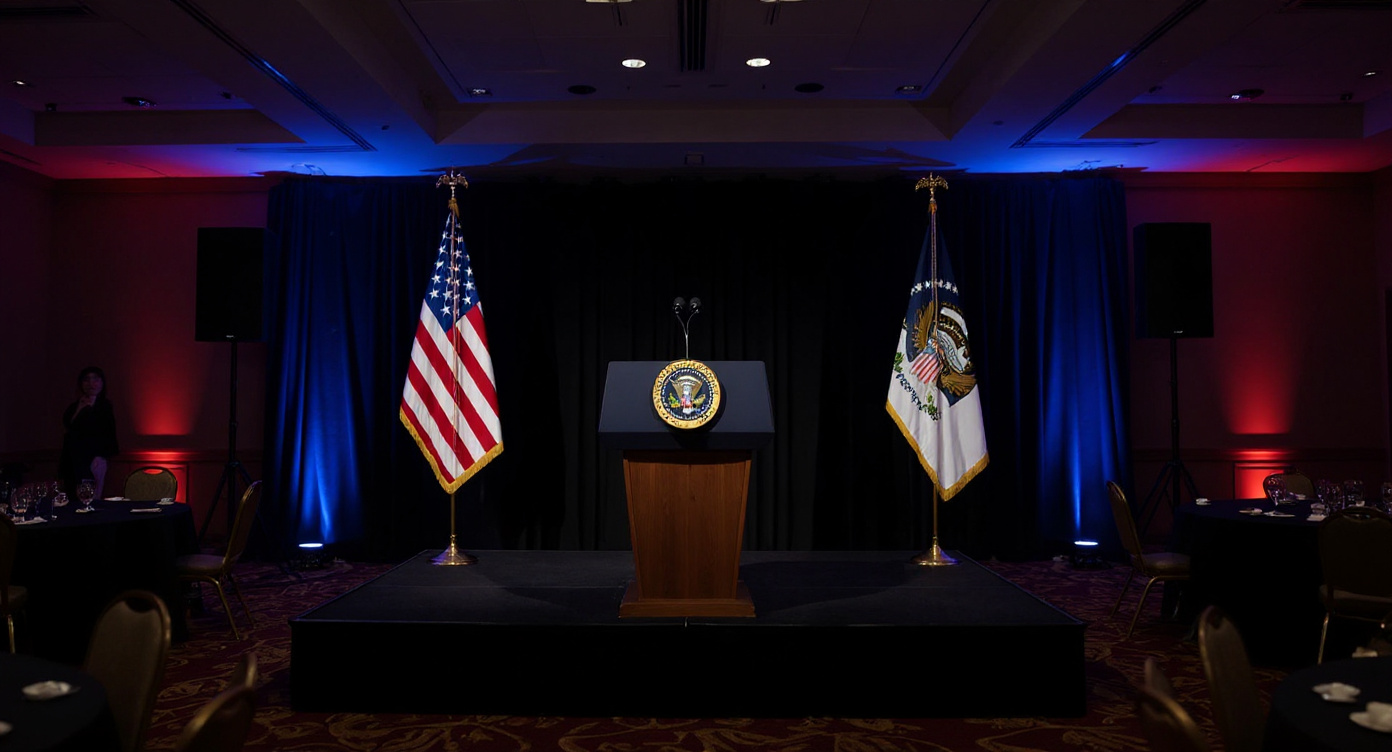
No sitting president in American history has ever held a midterm convention. Not Lincoln. Not Reagan. Not FDR across four terms and a world war. On Tuesday, Donald Trump announced he'll be the first, scheduling a two-day Republican gathering in Dallas, Texas for September 9-10, 2026, themed "The Great American Comeback."
The RNC hasn't even finalized the venue yet. They're still working out ticketing and speakers. And the whole thing already feels like the biggest political event of the year.
President Trump made the announcement on Truth Social with the subtlety we've come to expect. "BIG NEWS! For the first time ever, the Republican Party will hold a MIDTERM CONVENTION," he wrote. "It will be in Dallas, Texas, one of my favorite places in the world. It will be fantastic!" He described it as "a RALLY like none other" — which, given the scale of Trump rallies over the past decade, is a sentence that should make arena managers start sweating.
The stated purpose is to rally the full spectrum of Republican energy heading into the 2026 midterms. Business leaders, manufacturers, first responders, entrepreneurs, innovators, job creators — Trump listed them all. This isn't a donor retreat at a resort in Palm Beach. It's a public mobilization event designed to turn the midterm cycle into a movement cycle.
And there's a reason for the confidence. The administration is heading into the midterms with a policy record it can actually list in bullet points without flinching. No tax on tips, overtime, or Social Security. Border enforcement that's produced measurable results. Oil prices dropping. American energy production at levels that make OPEC nervous. An Iran denuclearization effort that's further along than any previous administration managed. Job creation numbers that hold up under scrutiny.
That's a different position than the one most second-term presidents find themselves in heading into their first midterm as a lame duck. Usually by this point, the party in power is playing defense — trying to minimize losses, managing scandals, hoping the base shows up despite midterm fatigue. Trump is doing the opposite. He's treating September like it's October 2024 all over again.
The timing is also worth noting. September 2026 puts the convention roughly two months before Election Day. Close enough to matter, far enough out to build on. It also coincides with America's 250th birthday year, a detail the announcement leaned into. "THE GOLDEN AGE OF AMERICA HAS ONLY JUST BEGUN," Trump wrote to close the post — connecting the midterms not just to his agenda but to the broader national moment.
Conventionally, midterm elections are referendums on the sitting president. The opposition party shows up angry. The president's party stays home. That's the pattern since roughly forever. The entire Democratic midterm strategy depends on it. If Trump can break that pattern — if he can turn a midterm into a rally year — the math changes in ways that are hard to overstate.
As LifeZette reported, the RNC is expected to release additional details on the venue, ticketing, and speaker lineup in the coming weeks. That speaker list is going to matter. If it's Trump plus a handful of loyalists, it's a big rally. If it's Trump plus governors, senators, House candidates, and cultural figures, it's something the Republican Party has genuinely never attempted.
There's a reason no president has done this before. Midterms are supposed to be local. The conventional wisdom says nationalizing a midterm helps the opposition because it turns every race into a referendum on one person. That's true — when the person in question is underwater. When the person in question just packed arenas across the country and won the popular vote, the calculus flips.
Democrats spent 2024 arguing that Trump's movement was a personality cult that would collapse without him on the ballot. Then he put himself on every ballot by proxy and Republicans gained seats. Now he's doing it again, except this time he's building an actual convention infrastructure around it — two days, a major city, a national theme.
The last president who tried to make midterms about himself was Barack Obama in 2010. He lost 63 House seats.
Trump's betting he's not Barack Obama. Given the last ten years, that's not a terrible bet.