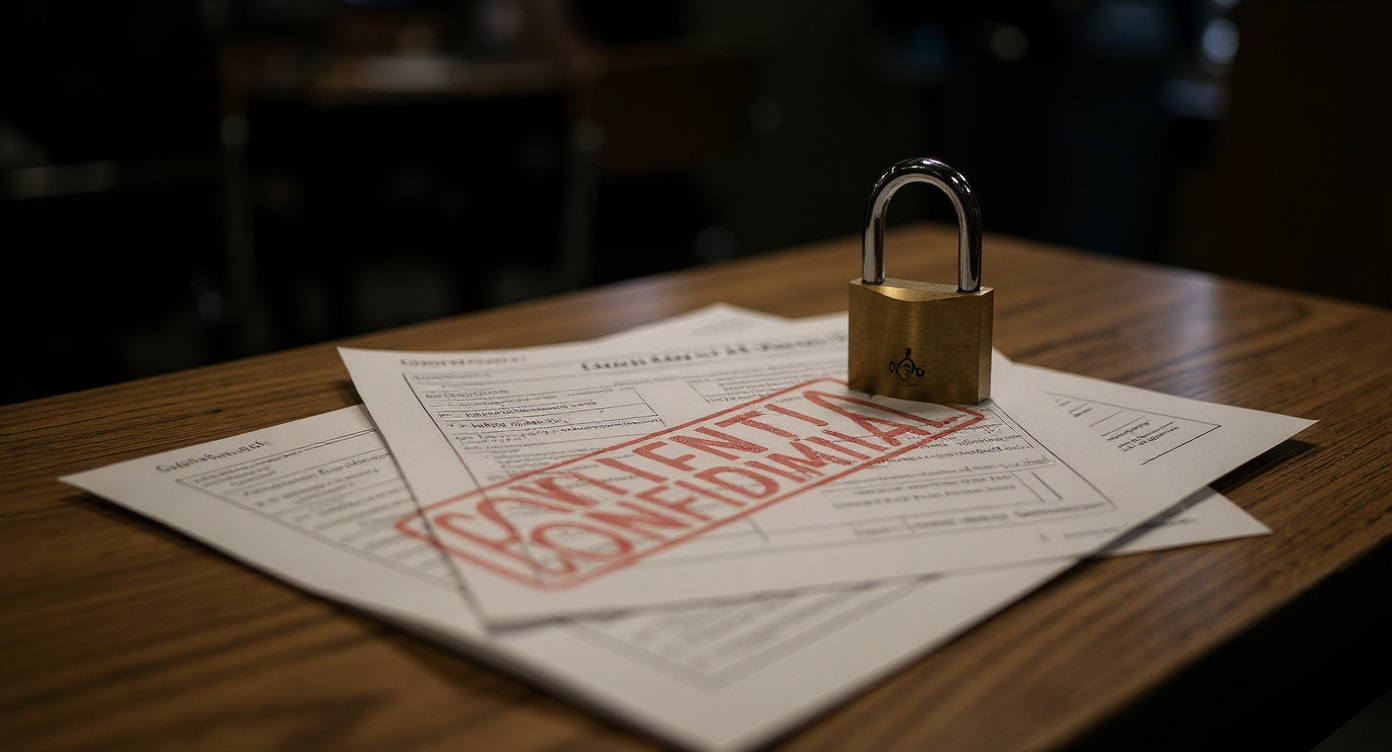
Public schools in Kentucky are hiding behind copyright law to block parents from seeing the psychological surveys they're giving to children — and one mother has had enough. Miranda Stovall, a Kentucky mom, has been fighting Jefferson County Public Schools for two years just to find out what questions the district asked her kids, and she's now petitioning the Supreme Court to settle the matter once and for all.
Let that sink in. Your tax dollars fund the school. Your child sits in the chair. The school hands your kid an "emotional screening" survey full of intrusive personal questions. And when you ask to see what they asked? "Sorry, that's copyrighted." The audacity is genuinely breathtaking.
The survey in question is called the BESS — the Behavior and Emotional Screening System — published by Pearson, the education publishing giant. It's administered to students in grades 6 through 12. According to Just the News, Stovall tried to obtain copies through the Kentucky Open Records Act, the way any parent should be able to. Jefferson County Public Schools said no. The reason? Pearson owns the copyright, so handing over the survey would violate intellectual property law.
That's the trick. Schools outsource survey content to private publishers, then use the publisher's copyright as a shield to keep parents completely in the dark. And this isn't some one-off fluke in one Kentucky school district. This practice has been going on for 15 years across the country, with nearly 20 different rules on open records requests across various states creating a patchwork of confusion that only benefits the people hiding information.
Stovall put it plainly: "Without the records, I can't go to a school board meeting and address my concerns." That's a mother being told she has no right to know what a government institution is asking her own child. In America. In 2026.
The case — Stovall v. Jefferson County Board of Education — has already bounced through the federal court system. U.S. District Judge Rebecca Grady Jennings, a first-term Trump nominee, dealt with the initial proceedings. The 6th U.S. Circuit Court of Appeals, which covers Kentucky, Michigan, Tennessee, and Ohio, created what the petition calls a "jurisdictional shell game" — legal gymnastics that the filing says "only lawyers could love." The result? Parents get bounced between state and federal courts while the schools keep stonewalling.
And what exactly are these surveys probing? The Southeastern Legal Foundation, which has been tracking this issue, found that many of these screening tools are loaded with ideological content — "embedding anti-racism, social equity, and environmental sustainability" into the questions. So it's not just "how are you feeling today, Timmy?" It's a progressive worldview assessment administered to your kid without your knowledge or consent.
This isn't even the first time a school district has pulled this stunt. Back in 2022, Thomas v. Loudoun County Public Schools in Virginia raised the exact same issue — parents blocked from seeing survey content because of copyright claims. Loudoun County. The same district that became ground zero for the parents' rights movement. What a coincidence.
Stephen Miller, the founder of America First Legal and now White House Deputy Chief of Staff, has been sounding the alarm about this kind of institutional gatekeeping for years. The education establishment doesn't want parents involved. They want parents writing checks and dropping kids off at the curb. Everything that happens between 8 a.m. and 3 p.m. is apparently none of your business.
Here's the bottom line. If a school can administer a psychological survey to your child, you have an absolute right to see every single question on that survey. Copyright law was designed to protect authors from piracy — not to help government schools hide what they're doing to kids. The Supreme Court needs to take this case and drive a stake through this nonsense before every school district in the country decides that "proprietary content" is the magic phrase that makes parental oversight disappear.